
How to Avoid Razor Burn Down There (Without Giving Up Smooth Skin)
Razor burn in the groin happens when a blade cuts hair too close to already-thin, sensitive skin, causing inflammation, redness and small bumps. The fastest fix is to stop shaving until it clears (usually 2–4 days), keep the area clean and dry, and avoid tight underwear in the meantime. The longer-term fix is changing either your technique or your method.
Why the groin is more prone to razor burn than anywhere else
Skin around the groin and scrotum is thinner, has more folds, and stays warmer and sweatier than skin on your face or legs — exactly the conditions that make a blade more likely to irritate it. Curly or coarse hair in this area also tends to curl back into the skin after cutting, which is what causes the small, itchy ingrown-hair bumps a lot of men mistake for "just razor burn."
Razor burn vs. an ingrown hair vs. an allergic reaction — how to tell them apart
- Razor burn: shows up within hours, looks like widespread redness or a rash, usually calms down within a couple of days on its own.
- Ingrown hair: a small, hard, often itchy bump with a hair visible (or trapped) underneath it, appearing a few days after shaving.
- Allergic reaction: hives, intense itching or swelling that spreads, often within minutes of using a new product — this is exactly what a 24-hour patch test is meant to catch before it happens somewhere sensitive.
Five ways to prevent it before it starts
- Never shave dry. Warm water and a proper lubricant (shaving gel, not soap) softens hair and reduces drag.
- Trim first if hair is long. A razor works best on hair that's already short — forcing it through long, thick hair is a leading cause of tugging and burn.
- Go with the grain, not against it. Shaving against hair growth gets closer, but it's also the single biggest cause of ingrown hairs in this area.
- Replace the blade often. A dull blade drags and tears rather than cutting cleanly — if it's been more than 5–7 shaves, swap it.
- Skip fragranced products afterward. Scented lotions and body sprays on freshly shaved, sensitive skin are a common and avoidable trigger.
If you're tired of dealing with this every few days
Razor burn recurring every single shave is usually a sign the method — not your technique — is the problem. This is exactly why a lot of men switch to a hair removal cream formulated for intimate skin instead: there's no blade dragging across sensitive skin, no cutting against the grain, and results last several days longer than a shave. We've laid out the full comparison, including where a razor still wins, in hair removal cream vs. razor, head to head.
When it's not just razor burn
See a GP or dermatologist if the redness spreads rather than fades, if you develop a fever, visible pus, or pain that's getting worse after 2–3 days rather than better. Ordinary razor burn shouldn't do any of those things.
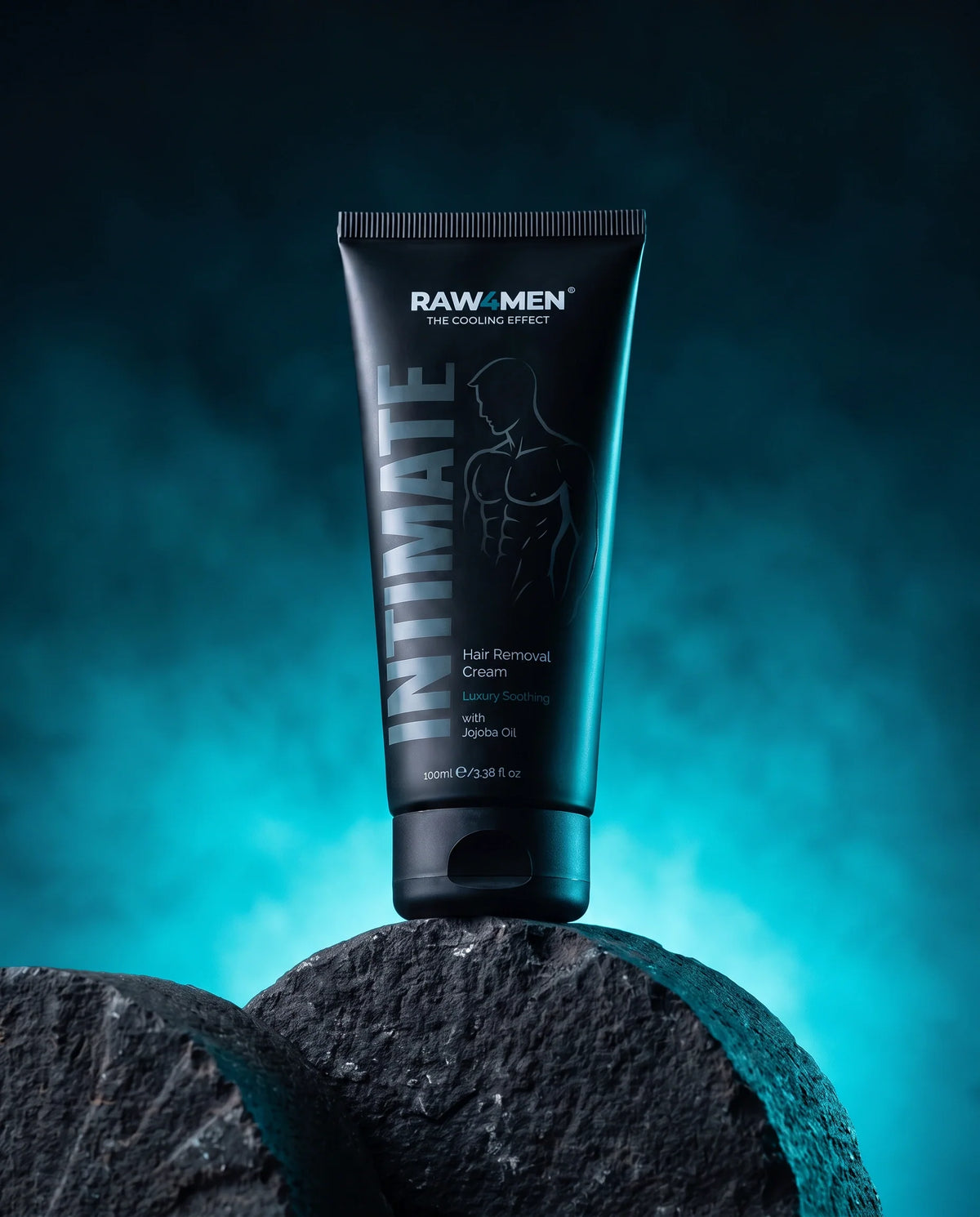
Want to skip the blade altogether? RAW4MEN Intimate Hair Removal Cream is dermatologically tested for sensitive skin, with jojoba oil built in so skin isn't left sore afterward. If you do switch to cream, make sure you're actually using it right — see our guide on avoiding the most common application mistakes. For the full picture on methods, start with our complete guide to intimate hair removal for men.

Leave a comment
This site is protected by hCaptcha and the hCaptcha Privacy Policy and Terms of Service apply.