
Article: Intimate Hair Removal for Men: A Complete Beginner's Guide

Intimate Hair Removal for Men: A Complete Beginner's Guide
Intimate hair removal for men means removing hair from the groin, scrotum and buttocks — usually with a razor, wax, laser, or a hair removal cream made for sensitive skin. Each method trades off speed, closeness, cost and irritation risk differently, and the right one depends mostly on how sensitive your skin is and how much upkeep you're willing to do.
If you've searched this, you've probably already decided you want to do it — you're just not sure how, or which method won't leave you sore. That's what this guide is for.
Why more men are grooming down there
This used to be a topic nobody talked about. That's changing. More men are removing hair from their intimate areas for reasons that are honestly pretty ordinary: comfort in tight workout gear or swimwear, less sweat and odour in warm weather, a partner's preference, or simply liking how it feels. None of these need justifying — it's your body, and "I just prefer it" is a complete answer.
The four main methods, compared
Here's the honest trade-off between the options, side by side.
| Method | How long it lasts | Irritation risk | Time per session | Cost |
|---|---|---|---|---|
| Razor | 1–3 days | High (nicks, razor burn) | 5–10 min | Low |
| Hair removal cream | 3–7 days | Low–medium (patch test first) | 4–10 min | Low–medium |
| Waxing | 2–4 weeks | Medium–high (initially painful) | 15–30 min | Medium–high |
| Laser / IPL | Months to permanent | Low once healed, but needs multiple sessions | Varies | High |
What actually causes most of the pain and irritation
Almost all groin-area irritation comes down to one of three things: cutting too close to the skin (razors), pulling hair against its natural direction (waxing), or using a product that isn't formulated for sensitive, thin skin (most body or facial hair removal creams aren't designed for this area, and it shows). This is also exactly why dermatologists generally recommend patch-testing any new product on your inner arm 24 hours before using it anywhere intimate — skin here reacts faster and more visibly than skin almost anywhere else on the body.
How to do it safely, step by step
Whichever method you choose, the same basic sequence keeps things simple and reduces irritation:
- Patch test first. Apply a small amount to your inner arm and wait 24 hours before using any new product intimately.
- Start with clean, dry skin. Product or a razor on damp, sweaty skin is a common cause of extra irritation.
- Apply evenly, don't rush. A thin, even layer works better than a thick one — more isn't more effective, it just sits there longer.
- Respect the timing. For creams, that usually means 4–10 minutes depending on hair thickness — never longer than the label says.
- Rinse thoroughly and pat dry. Don't rub. A soothing, fragrance-light moisturiser afterwards helps calm the skin.
- Wait 24–48 hours before repeating if you notice any redness, even mild.
Razor vs. cream vs. wax vs. laser: which should you actually pick?
If you want the shortest possible learning curve and the lowest cost, a razor is the default — but it's also the method most likely to leave you with razor burn or ingrown hairs in this particular area (we cover exactly why, and how to avoid it, in our razor burn guide). If you want something gentler that still only takes a few minutes, a hair removal cream formulated specifically for intimate skin — not a generic body cream — is usually the more comfortable middle ground. We go through that comparison in detail in cream vs. razor, head to head. Waxing lasts longest of the three at-home options but is genuinely more painful, especially the first few times. Laser is the only method that fades hair long-term, but it needs a clinic, several sessions, and a real budget.
Is this normal? Am I the only one doing this?
No, and it's a bigger question than it looks — enough that we wrote a full answer to it: is it normal for men to groom down there? If you want the fuller cultural picture, we also cover where male grooming actually started — gay men and bodybuilders got there decades before it went mainstream.
When to see a doctor instead
Mild redness that fades within a day or two is common and not usually a concern. But see a GP or dermatologist if you notice spreading redness, pain that gets worse rather than better, pus, fever, or any sign of infection after hair removal — those aren't something to wait out or treat yourself.
More from the RAW4MEN Journal
Once you've got the basics down, a few more guides worth a read: what actually makes RAW4MEN different from the cream you tried last time, how to use it correctly if you've had patchy results before, the hygiene and comfort case for grooming down there, prepping before the beach, pool or Pride weekend, and how often you should actually be doing this.
The bottom line
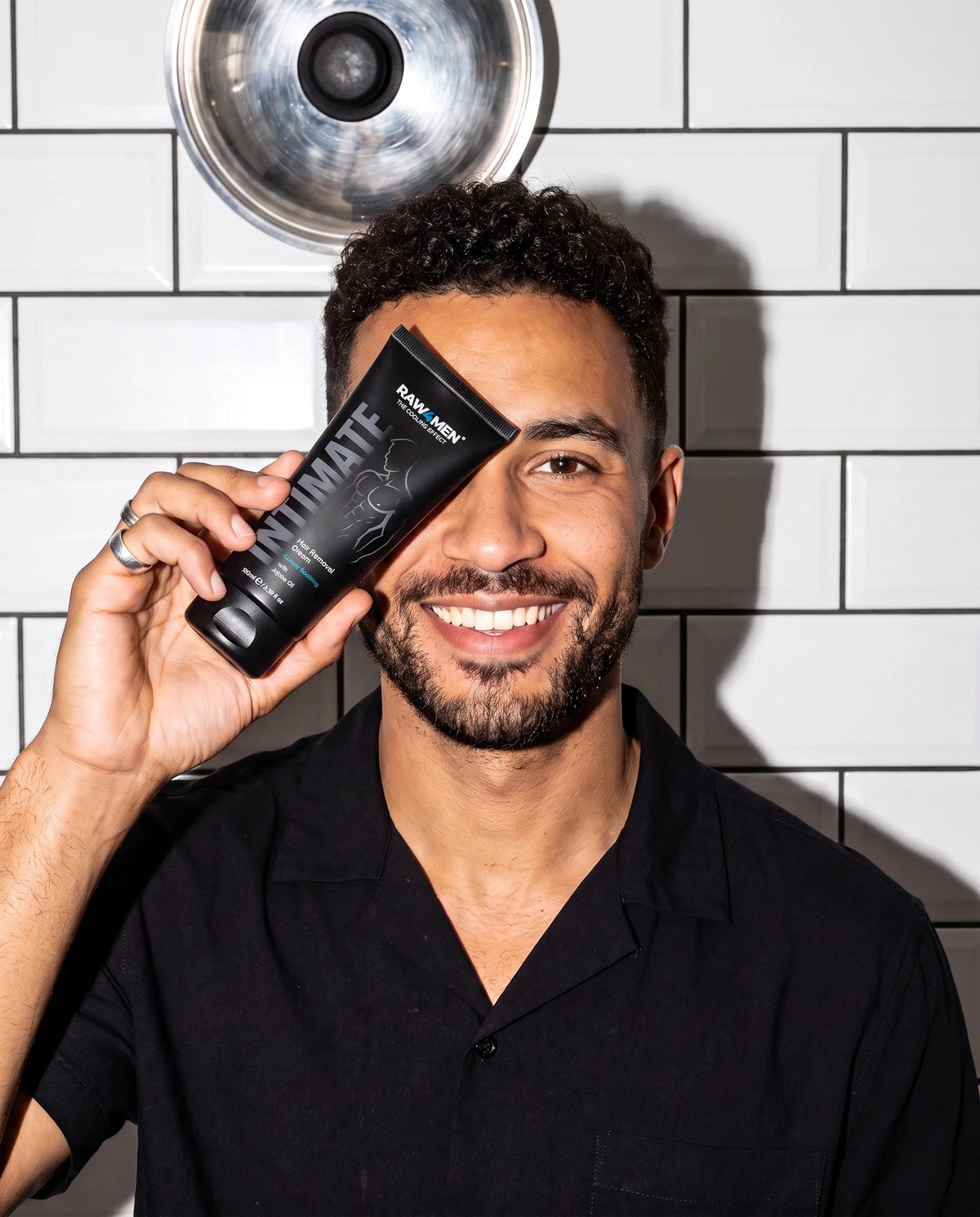
There's no single "best" method — there's the best method for your skin, your budget and how often you're willing to redo it. If sensitive skin and comfort matter most to you, that's exactly what RAW4MEN Intimate Hair Removal Cream was built for: 4–10 minutes, dermatologically tested, with jojoba oil so skin isn't left stripped and sore afterwards.
Leave a comment
This site is protected by hCaptcha and the hCaptcha Privacy Policy and Terms of Service apply.